Powering Change: IGEN-EA Equips Women to Lead the Clean Energy Revolution
"When I first heard that a woman like me could be trained as a solar technician, I was shocked," Sandra Agodenze, 20, says.
The resident of Kikuube district in western Uganda adds, "I could not bring myself to believe that I, a woman, could climb walls, and install solar for fellow community members."
When she was convinced by Mr. Robert Birungi of the Inclusive Green Economy Network-East (IGEN-EA) that even women can be good solar energy technicians, deep-seated cultural norms that undermine women's participation in the clean energy sector took hold of Agodenze.
"I thought to myself: won't I destroy the equipment? I also had other discouraging thoughts," Agodenze says.
She was eventually convinced by Mr. Birungi, who hosts the IGEN-EA clean energy hub in Kikuube district, to participate in a training for solar technicians.
Agodenze was trained alongside 15 other community members, ten of whom were women. The training took place in 2025 at the IGEN-EA clean energy hub in Kikuube district.
ABOUT THE IGEN-EA CLEAN ENERGY HUBS
IGEN-EA, which is currently hosted by AFEGO, established four clean energy hubs and community demonstration centres between 2023 and 2025. AFEGO supported the setting up of the hubs and demonstration centres, which are located in Fort Portal, as well as Kikuube and Buliisa districts.
The hubs are hosted by IGEN-EA member organisations while the demonstration centres are hosted by IGEN-EA's community allies with IGEN-EA's support.
The hubs and demonstration centres were established following community visioning exercises conducted by IGEN-EA member organisations in 2022. The exercises showed that community awareness of existing clean energy alternatives and their benefits was limited.
As such, communities expressed that even when access to finances was not a problem, biomass (firewood and charcoal) as well as diesel-powered irrigation water pumps among others would be their energy of choice.
The communities indicated that they were unaware of other alternatives, hence the above choices.
The clean energy hubs and demonstration centres were therefore set up to showcase available clean energy alternatives and their benefits for lighting, cooking and other productive uses. It was hoped that this would enhance awareness and uptake of clean energy.
To date, over 304,469 community members have been sensitised on or have visited the clean energy hubs and demonstration centres. By July 2026, over 24.9% of the community members that visited the clean energy hubs bought clean energy products.
In addition, between September 2025 and today, the hubs and IGEN-EA member organisations such as Community Watch Tower (COWAT) have supported the sale of 2.3 tonnes of briquettes, an energy-saving biomass that supports communities to take climate action.
IMPORTANCE OF CLEAN ENERGY HUBS
The IGEN-EA clean energy hubs are serving an important role. First, they are aligned with the Ugandan government's plans. Under the country's National Development Plan (NDP) IV, the Ugandan government set a target of setting up clean energy hubs and innovation centres as part of its efforts to enhance clean energy access.
In addition, while gaps in access to electricity and clean cooking energy are being closed in various continents such as Asia, Africa and Uganda lag behind. Available information shows that worldwide, 655 million people were without electricity in 2024. Of the top 20 countries without access, 18 were in Sub-Saharan Africa (SSA).
2 billion people were without access to clean cooking worldwide in 2024. Of these, 970 million were in SSA. Up to 1 billion are expected to be without access to clean cooking in SSA by 2027.
In Uganda, only 2.8% of the population cooks with clean energy including electricity and biogas while just over 20% have access to electricity. Nearly 40% have access to solar energy however.
The IGEN-EA clean energy hubs are supportive of efforts seeking to close the clean energy access gaps seen in Africa.
(Image placeholder — you mentioned you'll add this manually)
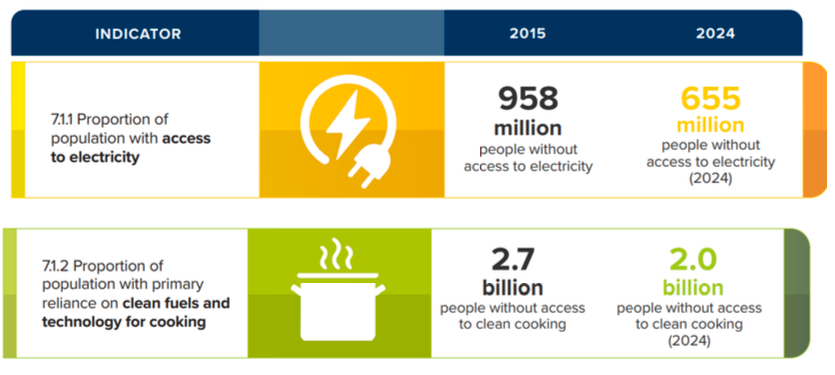
Graphics showing clean energy access gaps across the globe; the majority of people without access to clean energy are in SSA.
Source: International Energy Agency et al
SKILLING CHALLENGES
The majority of Ugandans with access to clean energy have off-grid solar energy technologies. This heightens the demand for solar technicians.
Private sector industry experts however say that despite the growing market and demand for competent solar technicians, most Technical and Vocational Education and Training (TVET) institutions that are engaged in the training of solar technicians provide limited practical exposure to installation, operation and maintenance of solar systems. Consequently, graduates end up requiring significant additional employer-led training before becoming productive in the workplace.
The experts also say that there is weak collaboration between academia and industry. Employers consistently report shortages of competent solar technicians, energy auditors, battery technicians, mini-grid operators, productive use of energy specialists, and renewable energy engineers.
In addition, women and youth remain underrepresented in technical renewable energy careers due to limited targeted training programmes, gender stereotypes, inadequate mentorship opportunities and financial barriers to technical education. This reduces diversity and limits the available skilled workforce needed to accelerate the adoption of clean energy.
IGEN-EA EFFORTS TO ADDRESS SKILLING GAPS
To contribute to bridging the skills gap, in September 2025, the Uganda Solar Energy Association (USEA) partnered with the IGEN-EA clean energy hub in Kikuube district to provide solar installation training for women and youth.
As was earlier indicated in this article, a total of 15 trainees were enrolled, comprising ten women and five men. Upon successful completion of the training, the trainees underwent competency assessments by Uganda Vocational and Technical Assessment Board (UVTAB) to enable the successful trainees to receive certification as qualified solar technicians.
Agondeze was among those that were certified. Today, she is a clean energy ambassador and practices her skill in her community.
She says, "The solar energy training showed me that women can be technicians in male-dominated fields and they don't come to any harm. I also got to really like solar energy and started appreciating its benefits because of the training. I got myself a solar home system and it now acts as an inspiration for other community members. When they see my home with constant light and hear about the benefits, they are forced to engage us and ensure they also acquire one."
CONCLUSION & RECOMMENDATIONS
Uganda's transition to clean energy will depend not only on expanding access to renewable energy technologies but also on developing a skilled workforce capable of installing, operating, maintaining, and promoting clean energy technologies.
To ensure that the existing skills gaps in the clean energy sector are bridged, government, through the Ministry of Education and Sports, should integrate comprehensive clean energy courses into TVET and higher education curricula, ensuring that graduates possess the technical skills required by the rapidly growing clean energy sector.
In addition, government should put in place a comprehensive national professional certification framework covering the entire renewable energy value chain. The certification of solar installers remains inconsistent, with many technicians operating without nationally recognised competency-based certification. Government should close this gap.
There is also need for the government to urgently enact a law to address the worsening problem of solar counterfeit products on the market. The counterfeit products remain the single biggest obstacle to building confidence in communities regarding the clean energy alternatives and their benefits. The law should provide punitive penalties for those who import and sell counterfeit clean renewable energy products in Uganda.
Last but not least, IGEN-EA should engage other stakeholders to build capacity to establish more hubs and demonstration centers in all districts across the country. The hubs and demonstration centers have potential to help citizens including those deep in the villages to understand the various clean renewable technologies and their benefits as well as to identify and differentiate the right products from counterfeit.